The Role of Light Weight Aluminum Casting in Innovative Production Solutions and Applications
Aluminum Casting has actually become an important element in contemporary manufacturing. Its ability to produce lightweight and complex parts is particularly useful throughout numerous industries. As industries venture for performance and ingenious layout, the advancements in aluminum Casting technologies are significant. The effects of these growths prolong past mere production. Comprehending the complete influence of aluminum Casting could reveal unforeseen insights right into future manufacturing techniques.
Understanding Light Weight Aluminum Casting: An Essential Summary
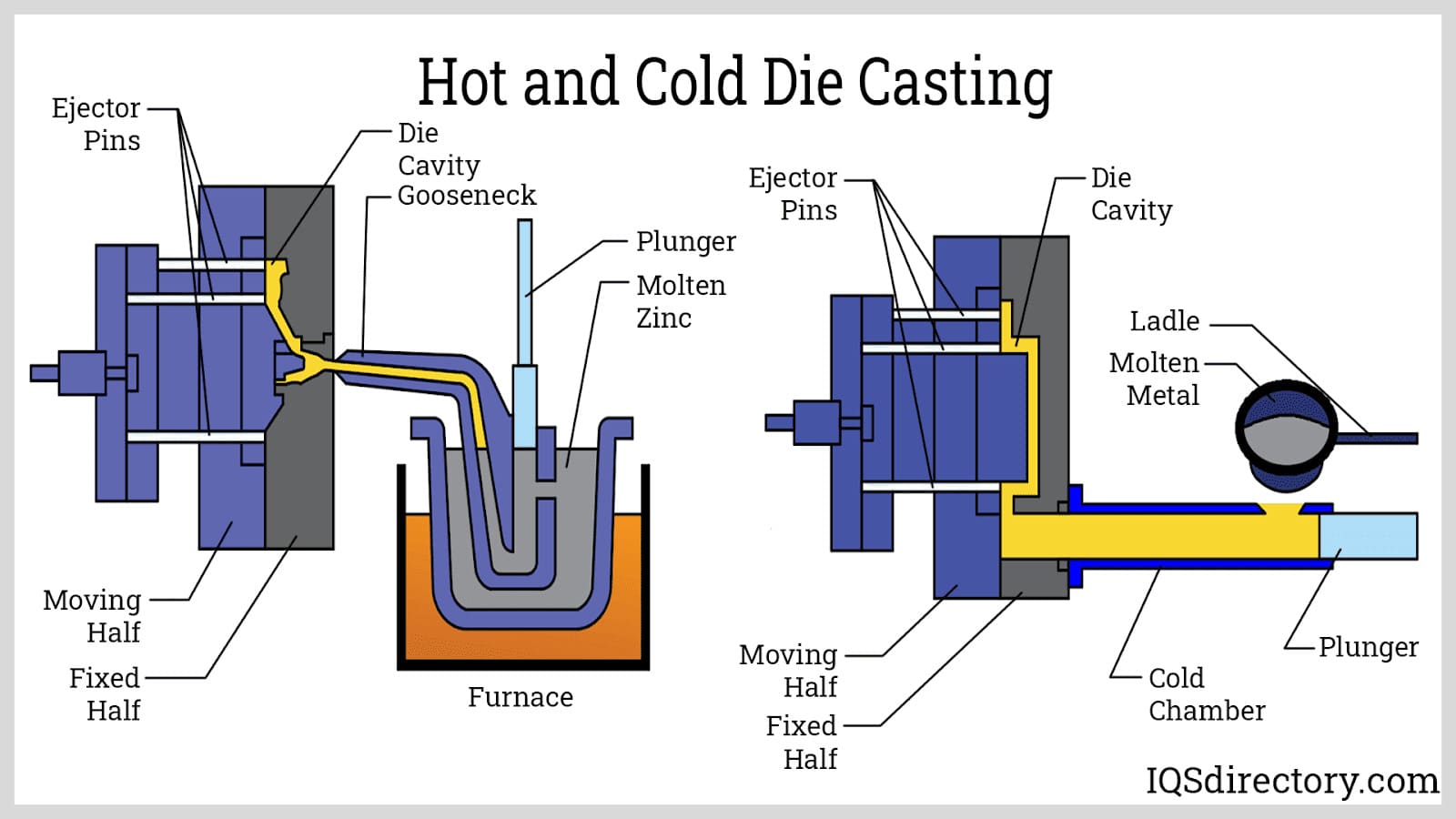
Aluminum casting works as a critical procedure in the manufacturing market, transforming liquified light weight aluminum right into elaborate shapes and elements. This technique includes various strategies, including sand casting, die casting, and financial investment spreading, each tailored to specific applications and needs. In sand spreading, mold and mildews are created from sand and made use of to develop complicated geometries, while die Casting uses high-pressure to infuse light weight aluminum right into steel molds, ensuring accuracy and rate. Financial investment spreading, on the other hand, uses extraordinary detail and surface coating, making it appropriate for elaborate layouts. The light weight aluminum Casting process begins with melting aluminum, complied with by putting it right into ready molds. As soon as cooled, the cast parts go through finishing procedures, such as machining and surface area treatment, to enhance their performance features. Understanding the fundamentals of light weight aluminum Casting is necessary for producers looking for to take advantage of the unique residential or commercial properties of light weight aluminum in their production procedures, ensuring high quality and performance in the end products.
Advantages of Aluminum Casting in Manufacturing
Light weight aluminum casting deals countless advantages in manufacturing, primarily because of its light-weight nature, which boosts product performance. Furthermore, its superior deterioration resistance expands the durability of cast parts, reducing upkeep prices. The ability to produce complicated shapes allows for ingenious styles that fulfill diverse market demands.
Light-weight Product Conveniences
While numerous materials are employed in production, the lightweight nature of aluminum Casting offers substantial benefits that improve efficiency and efficiency. This particular decreases the total weight of parts, promoting easier handling and transport during the production process. Additionally, light-weight aluminum parts add to improved gas performance in aerospace and vehicle applications, eventually causing reduced functional prices. The minimized weight can also make it possible for more adaptable styles, permitting designers to innovate without endangering architectural integrity. In addition, the fast manufacturing capabilities of light weight aluminum Casting allow suppliers to create light-weight elements quickly, fulfilling the growing demand for reliable and cost-effective remedies. Overall, the lightweight advantages of light weight aluminum Casting play a crucial function in modern-day manufacturing techniques.
Superior Rust Resistance
When considering materials for manufacturing, the remarkable deterioration resistance provided by aluminum Casting sticks out as a crucial benefit. This integral home enables light weight aluminum actors parts to endure extreme atmospheres, making them suitable for numerous applications in sectors such as vehicle, aerospace, and marine. Unlike lots of steels, light weight aluminum establishes a protective oxide layer that prevents additional oxidation, making certain long life and resilience. This resistance not only lessens upkeep prices but likewise enhances the general life expectancy of products. Additionally, the light-weight nature of aluminum, incorporated with its corrosion resistance, makes it a recommended selection for manufacturers seeking to improve efficiency and performance while minimizing weight. Inevitably, this characteristic settings light weight aluminum Casting as a trustworthy material in innovative production solutions.
Facility Forming Capacities
Launching the possibility for detailed layouts, aluminum Casting succeeds in its capability to create complex forms with accuracy and performance. This production technique permits the manufacturing of thorough parts that may be tough or impossible to attain with other approaches, such as machining or creating. The fluidity of liquified aluminum allows it to fill intricate mold and mildews, recording fine details and making sure a high level of dimensional precision. Furthermore, the convenience of aluminum alloys boosts the design opportunities, accommodating numerous applications across sectors. Aluminum Casting Manufacturer. With decreased material waste and shorter preparations, light weight aluminum Casting not just simplifies production yet additionally promotes cutting-edge layout remedies, making it a favored option for suppliers and engineers seeking to press the limits of style and capability
Recent Innovations in Aluminum Casting Technologies
New alloys are being created to enhance mechanical residential properties, providing raised stamina and corrosion resistance. In addition, developments in simulation software program allow makers to predict casting end results with greater accuracy, lessening issues and optimizing designs. The application of automation and robotics in casting procedures has in addition streamlined operations, decreasing labor prices and increasing precision. Overall, these improvements placement light weight aluminum Casting as a critical modern technology in the evolution of manufacturing, dealing with the expanding demand for sustainable and innovative options throughout different markets.
Trick Industries Benefiting From Light Weight Aluminum Casting
Aluminum Casting has emerged as a crucial modern technology for numerous crucial markets, substantially changing their manufacturing processes. The auto field has actually considerably benefited, making use of light weight aluminum castings for lightweight parts that boost gas efficiency without endangering safety and security. The aerospace sector leverages aluminum for its high strength-to-weight proportion, allowing the production of airplane parts that boost performance and lower functional costs.
The electronic devices industry additionally discovers aluminum Casting helpful, as it offers reliable thermal administration services for digital gadgets. In the building and construction field, aluminum spreadings are progressively used for architectural parts as a result of their deterioration resistance and sturdiness. Additionally, the clinical equipment industry uses aluminum Casting to manufacture precise instruments and devices, ensuring this contact form high requirements of top quality and dependability. Jointly, these industries highlight the versatility and effectiveness of aluminum casting, placing it as a keystone of modern-day production options.
Instance Studies: Successful Applications of Aluminum Spreading
Effective applications of light weight aluminum Casting illustrate its transformative impact throughout various sectors. In the vehicle industry, business have actually utilized aluminum casting to create light-weight engine components, considerably improving gas effectiveness while keeping toughness. Extremely, a leading manufacturer adopted die Casting techniques to create intricate transmission housings, resulting in a 20% reduction in weight contrasted to typical products.
In aerospace, light weight aluminum spreadings have actually been utilized for important airplane components, improving performance and decreasing general costs. A popular copyright teamed up with a spreading firm to develop high-strength wing brackets, showing superior longevity under extreme problems.
Furthermore, the electronic devices market has actually taken advantage of light weight aluminum Casting by creating heat sinks that enhance thermal management for high-performance devices. A technology giant carried out precision Casting to attain detailed styles, causing improved product effectiveness. These study underscore aluminum spreading's flexibility and its vital duty in driving development across several sectors.
Ecological Impact and Sustainability of Light Weight Aluminum Casting
While the advantages of aluminum Casting are well-recognized, its ecological influence and sustainability are progressively essential factors to consider in modern-day manufacturing. The manufacturing of light weight aluminum includes substantial energy intake, largely from the removal and refining of bauxite ore, which can contribute to greenhouse gas exhausts. Light weight aluminum Casting supplies a pathway to sustainability with recycling. Recycled light weight aluminum requires only around 5% of the dig this energy needed for key production, greatly minimizing the carbon impact.
Furthermore, aluminum's light-weight residential properties boost fuel effectiveness in transport applications, further alleviating environmental impacts. Makers are additionally taking on cleaner practices and technologies, such as utilizing renewable resource resources and enhancing waste monitoring systems, to decrease their eco-friendly impact. On the whole, while challenges remain, the capacity for sustainability in aluminum Casting is considerable, making it a critical component of environmentally accountable manufacturing options. Firms are encouraged to prioritize lasting techniques to advertise a greener future in this industry.
Future Fads in Aluminum Casting and Manufacturing Solutions
Sustainable Production Practices
As sectors increasingly focus on sustainability, light weight aluminum Casting is evolving to incorporate more environment-friendly techniques and technologies. Manufacturers are adopting closed-loop systems that recycle aluminum scrap, decreasing waste and energy usage. By using renewable resource resources such as solar and wind, casting centers aim to decrease visit homepage their carbon footprint. Advanced approaches, like using water-based layers as opposed to solvent-based ones, better enhance the ecological profile of aluminum Casting processes. Additionally, there is a shift toward lightweight styles that optimize material usage, adding to resource effectiveness. Collective initiatives amongst firms to share best practices and innovations in lasting manufacturing are additionally increasing, showing a commitment to environmental stewardship within the light weight aluminum Casting market.
Advanced Casting Technologies
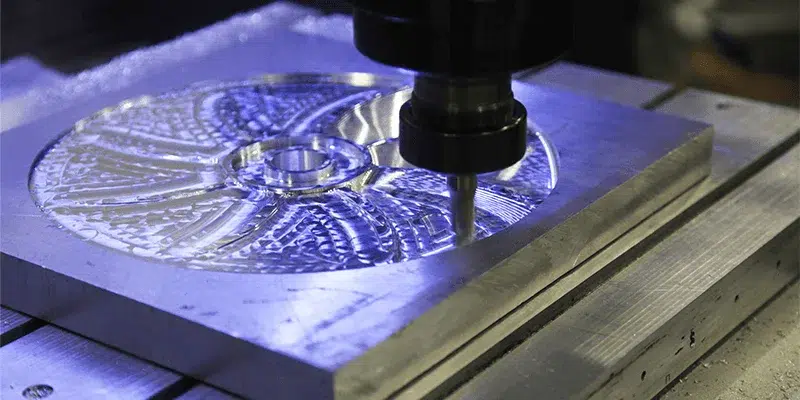
Ingenious Casting technologies are established to change the light weight aluminum manufacturing landscape, driving effectiveness and precision to extraordinary degrees. Techniques such as 3D printing and automated mold-making procedures are arising, enabling the manufacturing of complicated geometries that were previously unattainable. These advancements not only decrease waste but also reduce lead times, enhancing total efficiency. Additionally, the assimilation of simulations and predictive analytics facilitates boosted quality assurance, allowing suppliers to anticipate potential flaws and optimize layouts before production. Moreover, progressed alloys and therapy processes boost the mechanical buildings of actors light weight aluminum, broadening its applications throughout numerous industries. As these innovations develop, they assure to develop a much more receptive and nimble production community, placing aluminum Casting at the center of development.
Sector 4.0 Integration
With the increase of Industry 4.0, light weight aluminum Casting is positioned to undergo considerable transformations that take advantage of clever innovations and data-driven remedies. The integration of the Internet of Points (IoT), expert system (AI), and progressed analytics will make it possible for suppliers to optimize production processes, decrease waste, and enhance high quality control. Smart sensing units can give real-time information on material, stress, and temperature level buildings, facilitating anticipating upkeep and lessening downtime. Additionally, automation and robotics will certainly improve precision and efficiency in casting procedures. These innovations will certainly not just enhance operations but likewise allow customization and fast prototyping, meeting the developing needs of the market. Because of this, aluminum Casting will certainly play a pivotal function in the future landscape of manufacturing, characterized by increased dexterity and sustainability.
Often Asked Questions
What Are the Common Issues in Light Weight Aluminum Casting Processes?
Common problems in light weight aluminum Casting processes consist of porosity, shrinking, additions, surface blemishes, misruns, and cool shuts. These problems can arise from variables such as inappropriate temperature level control, inadequate mold and mildew layout, and contamination throughout spreading.
Exactly How Does Aluminum Casting Compare to Other Casting Methods?
Aluminum casting, noted for its light-weight and deterioration resistance, frequently outperforms methods like iron or steel Casting in specific applications - Aluminum Casting Manufacturer. Its capacity to generate elaborate designs and maintain dimensional accuracy boosts its competitive side in manufacturing
What Is the Typical Life-span of Light Weight Aluminum Cast Products?
The regular life expectancy of aluminum actors products differs based upon usage and ecological conditions, typically varying from several years to years. Factors such as rust resistance and mechanical stress substantially influence their longevity and efficiency.
Can Aluminum Casting Be Utilized for High-Temperature Applications?
Aluminum Casting can be utilized for high-temperature applications, although its performance is restricted by the melting factor of light weight aluminum. Specialized layers and alloys may improve longevity and resistance under severe thermal problems, ensuring efficient capability.
What Are the Safety Precautions in Aluminum Casting Workflow?
Security safety measures in light weight aluminum Casting procedures consist of making use of individual safety devices, making sure correct air flow, monitoring temperature, maintaining equipment, and adhering to safety protocols. These steps help avoid mishaps and shield employees from possible threats associated with molten aluminum.
Light weight aluminum casting offers as a critical process in the manufacturing industry, transforming liquified light weight aluminum into intricate shapes and components. The light weight aluminum Casting process begins with melting aluminum, followed by putting it right into prepared molds. The future of light weight aluminum Casting is positioned for considerable improvement with the adoption of sustainable production techniques and progressed Casting innovations. Aluminum casting, noted for its light-weight and deterioration resistance, often surpasses methods like iron or steel Casting in certain applications. Light weight aluminum Casting can be utilized for high-temperature applications, although its efficiency is restricted by the melting point of light weight aluminum.